

Building a positive relationship with food and your body
For an accessible version or to translate, visit:
https://tinyurl.com/2q2p4rgu
Scan to view online

What is disordered eating?
Session 1
 Download
Track your progress

WELCOME
TO MODULE 3
Welcome to Module 3! In this module we will focus on normal eating, strategies and provide you with information on disordered eating that we hope will help you in your journey.
Learn to be body positive
Manage expectations
Learn self-worth
Download Sessions once complete
Brought to you by

East London
NHS Foundation
Trust

NELFT NHS Foundation Trust
- NELFT NHS Foundation Trust
https://www.nelft.nhs.uk/- East London NHS Foundation Trust
https://www.elft.nhs.uk/


Disordered Eating is a phrase used to describe a range of irregular eating behaviours that do not warrant a diagnosis of a specific eating disorder. However, the behaviours can still be of concern and disordered eating can be a predisposing factor for an eating disorder.

Eating disorders, such as anorexia nervosa (AN), or bulimia nervosa (BN), are diagnosed according to specific criteria. This can mean that many people who experience disordered eating may not necessarily fit the official criteria.

A person with disordered eating patterns may not display all of the classic symptoms typically identified with eating disorders, but they are likely to be experiencing significant physical, emotional and mental stress.
Disordered Eating vs Eating Disorder
The most significant difference between an eating
disorder and disordered eating is in the severity and the frequency of the symptoms which impacts on whether or not a person's symptoms and experiences align with the criteria defined by the American Psychiatric Association and the World Health Organisation.

Disordered eating that does not meet criteria for an
eating disorder diagnosis may still require attention and
appropriate action as they may become more problematic eating disorders and put individuals at risk of serious health problems.
The term "disordered eating" is a descriptive phrase, not a diagnosis. It is possible to have disordered eating patterns that do not fit within the current confines of an eating disorder diagnosis.
It is not uncommon to notice changes in teenagers’ eating habits as they approach and navigate adolescent years.
There are a number of things that would be considered normal aspects of adolescence that may influence their eating behaviours.

Healthy eating habits may become less common, e.g. often skipping
breakfast, avoiding eating meals with the family etc.
Increased independence may also be
reflected in food choices that they make.
Adolescence also bring about puberty, significant
physiological growth and changes in brain development.
This may also influence changes in appetite and
eating behaviours, likely increased appetite.
Teenagers are largely influenced by their peers, navigating
friendships and developing a sense of belonging, which is
crucial in their social development. With this brings aspects
of social eating, which may influence their preferences and
patterns of eating.
During adolescent years, growth and brain development
increases significantly. In order to support these changes
in the body, teenagers will often need more sleep, as well
as social influences, which may effect sleep and wake times.
This in turn can impact eating patterns for your teenager.
signs and symptoms of disordered eating

Frequent dieting, anxiety associated
with specific food or meal skipping

Chronic Weight
Fluctuations


A feeling of loss of
control around food, including
compulsive eating habit

Preoccupation with food, weight
and body image that negatively
impacts quality of life

Rigid rituals and routines
surroundings food and exercise

Using exercise, food restriction, fasting or
purging to "make up for bad foods" consumed

Feelings of guilt and shame
associated with eating

Emotions are the feelings we get as we interact with ourselves and the world. We experience them as sensations in our bodies and changes in our thoughts. Emotions tell us when we’ve found something good, safe or fun, and they alert us to danger and things we should avoid or protect ourselves from. In short, they help guide our responses and reactions to people, situations and ourselves.
But dealing with emotions can be difficult. We need to be shown how to recognise and respond to our emotions (this usually happens when we’re very young), and we need to be in an environment that is accepting of them. For instance, feeling sadness or anger can be unpleasant. If we don’t recognise these emotions, or if we are in a situation that doesn’t encourage or allow us to express them, we might struggle to know how to respond to them and end up feeling confused or overwhelmed. Sometimes this is referred to as ‘emotional dysregulation’ or ‘struggling with emotion regulation’.
If this happens too often, we can end up turning to less helpful ways of coping with our emotions, like self harm, compulsive checking, or under or over-eating. For some people, controlling food and eating feels like it protects them from unpleasant memories or experiences by managing or even getting rid of unwanted emotions. Using food and eating as a way of soothing or managing emotions that we don’t recognise or know how to respond to is very common. We all do it from time to time – just think about the last time you had a bad day and someone suggested a cup of tea and a biscuit!
But for some people, controlling food and eating can become the primary way of managing emotions that are difficult to understand or know how to respond to. Patterns of controlling food or eating can then become hard to give up and other areas of the person’s life might start to suffer as a result.
Write some notes for yourself in the section below...
Establishing regular eating habits is a fundamental intervention for anyone experiencing disordered eating patterns. Regular eating is the foundation upon which other positive changes in your loved ones eating habits will be based.
Support your young person to eat roughly every three hours, taking the form of three meals, breakfast lunch and dinner, and two or three snacks per day. This can be modified as needed later on.
Regular eating gives structure to eating habits so that eating can start to become a regular part of life again. It helps to combat delayed, infrequent or unstructured eating and reduces binge eating. It stabilises blood sugar levels reducing tiredness, dizziness and increased irritability. Regular eating also maintains a steady metabolism and prevents the body going into starvation mode in which the body stores energy from food.
What can I do to help with irregular eating patterns?
Help the young person to plan their meals and snacks for the day. Meals and snacks should take precedence over other activities.

If the young person is tempted to purge or use laxatives after eating, support them to distract them from these difficult thoughts, and help them to learn ways to ‘surf the urge’ to engage in these behaviours
Encourage the young person to stick to the plan and avoid eating between meals and snacks.
How can I help my loved one to cope in a different way?
Irregular or disordered eating patterns are often used to manage difficult emotions, however this is often a maladaptive coping strategy.
Therefore, it is helpful to support someone to find alternative, more adaptive ways to communicate and manage these emotions.
This can be done through emotion coaching strategies.

Emotion coaching is a universal strategy for supporting the behavioural and emotional wellbeing of children, adolescents and adults.
It can be used as a technique to connect with your loved one in the moment, re-direct behaviour and avoid or de-escalate outbursts.
It can also be used to support the development of emotional health in general through strengthening connections in the brain involved in the regulation of emotions.
This helps your loved one to develop the capacity to manage their own emotions in a more helpful way, rather than using behaviours such as irregular or disordered eating.

Learning to validate. Swapping “BUT to BECAUSE”. This helps to convey your understanding of why your loved one might be feeling the way that they do.
Validating their emotional experience will have a calming effect for your loved one. Validation is most effective when you use three “because”. For example, When doing this, match your loved one’s tone, volume and energy. We are often pulled to offer reassurance but it is really important to validate first!
Emotional support. Each emotion has a specific emotional need. Sadness needs comfort; anger occurs because a need is not met so help them identify this need (space, a boundary, to feel heard). This is your opportunity to offer comfort, reassurance, togetherness, hope, belief…
Practical support. Finally, it’s time to problem-solve. Time to offer practical support to help resolve the emotional problem experienced in that moment through distraction, redirection, exposure, setting limits and taking over where appropriate.
Validation is so important as the first step here! It calms the brain and makes the other person more open and flexible to comfort, reassurance and practical support. Don’t be put off by their response, keep going as this is letting them know that they feel heard.
International Institute for Emotion-Focused Family Therapy, 2019
STEP 01
Learning to Validate
I can understand why you
mightfeel sad because you
know you’re going to miss
out on the fun; and because
you were really looking forward
to this; and because you don’t
know when you’ll have
another opportunity
STEP 02
Emotional Support
I can understand why you might
feel sad because you know
you’re going to miss
out on the fun
STEP 03
Practical Support
You have to go to the appointment,
let’s think about what we can do
to make it more
manageable for you


International Institute for Emotion-Focused Family Therapy, 2019


You may get some push -back from your loved one they may say
- "Why are you talking to me like that? That's weird."
- "You can't possibly understand."
- "I'm not sad - I'm mad!"
These are normal responses, especially when you are trying a different way of communication
Do not be discouraged...
Keep practicing... and
Do not give up!

International Institute for Emotion-Focused Family Therapy, 2019
Well Done!
- Completed

You have


My Notes
Supporting Videos
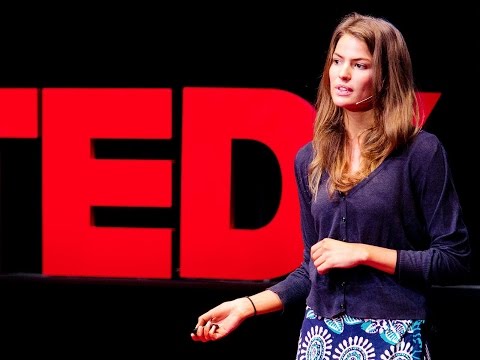
Looks aren't everything. Believe me, I'm a model.

Dove real beauty sketches. You're more beautiful than you think.

If you could change one thing about your body, what would it be?
We hear you and see you!
Get SupportSupported by


