

Building a positive relationship with food and your body
For an accessible version or to translate, visit:
https://tinyurl.com/2qkazc75
Scan to view online

Avoidant Restrictive Food Intake Disorder
ARFID for Professionals
 Download
Track your progress
What is ARFID – Avoidant Restrictive
Food Intake Disorder ?
APPARENT LACK
OF INTEREST
IN EATING
FOOD AVOIDANCE BASED ON SENSORY CHARACTERISTICS OF FOOD
CONCERN ABOUT
AVERSIVE
CONSEQUENCES
OF EATING

Significant weight loss (or failure to gain weight or faltering growth in children)
Significant nutritional deficiency
Dependence on oral/enteral feeding
Marked interference with psychosocial functioning
ARFID is not...

Multidimensional
Nearly half of individuals with ARFID who present for psychological treatment exhibit eating difficulties in multiple ARFID domains.
A typical example would be a young person with long-standing selective eating (sensory sensitivity) and chronic low appetite (lack of interest in eating)
Who loses weight
precipitously following an acute
choking episode (thus developing fear of aversive consequences)


Assessment
What is driving the avoidant / restrictive eating?
Lack of interest +/-
sensory issues +/-
concern or fear
What are the risks of the eating concern?
Impact on growth/ development, nutritional deficiency, impact on social/emotional development or family functioning
Any comorbidity?
E.g. ASD, ADHD, anxiety disorders
A new semi-structured multi-informant interview— (PARDI) has recently been developed to diagnose ARFID in children and adults (2019).
Long version
– structured interview
Short version
– questionnaires to be completed by both parents and YP if 14+
Outcome measures
-
Physical health measures
-
Standard ROMS (SDQ, RCADS, CGAS)
-
PARDI-AR-Q
-
Self-report 14+
-
Parent report 4+
-
-
What Matters to Me
-
Parent report goal measure
-
Supertaster
CHILDREN WHO WERE TASTERS (75% OF SAMPLE) WERE MORE LIKELY TO HAVE BEEN DESCRIBED AS FUSSY EATERS THAN THE NONTASTERS, AND THE SUPERTASTERS WERE MORE LIKELY TO BE IN THE LOWEST HEIGHT DECILE AT AGE 10
ADULTS PICKY EATERS RATED BOTH BITTER AND SWEET TASTE AS MORE INTENSE THAN DID
NON-PICKY
EATERS

When ARFID is present, usually...
Eat less than 20
types of food
Anxiety around
new food
Sensory-sensitivity
Contamination/
change in
textures – one
food can´t touch
the other
Is a more
developmental
rather then
acquire eating
disorder
Veggies and fruits
are very difficult –
texture, size,
flavour > no
pattern
Brown/beige
carbohydrate diet –
mashed potato, chicken, crisps...
Easier to manage in
terms of
texture/ smell/ bland
flavours
Smooth textures –
easier to manage
Loyalty to brand –
is about
predictability
Processed food -
know what to
expect (i.e. all
nuggets will be the
same)


THIS IS A BISCUIT

"I was eating my biscuit and suddenly was soft and I stopped eating it because biscuit should be crunchy" = if not crunchy is not a biscuit and therefore is not “safe”

THIS IS NOT A BISCUIT

"I have trouble eating other brands I'm not familiar with, an example of this would be different brands of Digestive biscuits.
The reason is partly because the biscuits of a different brand are unfamiliar to me but also "unsafe" as the ingredients of a different brand differ to what I'm now familiar with and feel safe to consume"

THIS IS NOT CONTAMINATED

"Once Food is prepared in my own “Contamination free” method it is then packed into individual Foil parcels.
These foil parcels are then placed on a fresh piece of foil and transported to a private place I can sit and eat
without being watched in fear of being judged"

THIS IS CONTAMINATED

"Another element to my eating issues is around Contamination and germs,
particularly around food preparation
which includes handling and storing food.
For this reason I have trouble allowing anyone else to prepare or handle
my food. I store my food Separately where only I have access to it."
THINGS YOU MIGHT HAVE NOTICED….
- Sensitive to smell, look, taste, texture or all together
- Not feeling hungry, forgetting about eating, feeling full very quick, not “liking” to eat, no interest in food or all together
- Fear of eating because it might cause vomiting, choking, gaging or all together
- Anxious temperament

NEGATIVE FEELINGS ABOUT FOOD
- Fear of new foods and not wanting to try new foods
- Smelling the food before trying
- Thinking that it won’t taste good anyway so it might be better not trying
- Thinking the food will make them sick/ vomit/ choke
- Not wanting to eat a food once eaten because it caused some reaction in the past (allergy, vomit, choke)
HEALTH CONSEQUENCES

- Weight loss
- Reduced hunger
- Vitamins and minerals deficiencies
- Difficulty in gaining weight
- Gut symptoms (i.e. upset stomach)
- Feeling full quickly
- Constipation
- Not getting taller
ACTING DIFFERENTLY AROUND FOOD
- Not eating at the dining table
- Finding it difficult to eat at school
- Not eating in front of other people
- Not feeling hungry/not being able to ay they are hungry
- Feeling uncomfortably full
- Sensitive to changes on how food looks
- Noticing small changes in food and its packaging (i.e. if the package has a different colour)
- Getting angry when they are forced to eat

NOT helpful things to do
Hiding foods they don’t like – they will find out and will impact their trust in you
Letting them go hungry – they will enjoy not having to eat and this will impact even more their lack of hunger
Pressure to eat or finishing on time – it will increase anxiety and it will not make them eat faster
Not giving their preferred food - they won’t start eating other foods if you limit the amount of preferred foods
Having the idea of “good” and “bad” food – food is food and if they are only managing a few foods, this is ok for now


Comorbidities
Common psychiatric comorbidities, including anxiety disorders, autism spectrum disorder and attention deficit hyperactivity disorder (ADHD)
Case reports suggest that comorbid ADHD treated with stimulant medication is sometimes a barrier to increasing caloric intake in individuals with ARFID who are underweight, because a common side effect of stimulant medication is decreased appetite.
The researchers found some overlap between ARFID and anorexia nervosa. In a review of treatment modalities for both disorders, many individuals who had ARFID diagnosis were sent for eating disorder treatment, up to 22% in chart reviews
Comorbidities
Table 2 clinical characteristics of patients by eating disorder diagnosis
|
ARFID (N=39) |
AN (N=93) |
BN (N=20) |
OSFEED/UFED (N=21) |
p-value | |
|---|---|---|---|---|---|
| Patient Characteristics (mean of %) | |||||
| Age (years) (SD) | 11.1 (1.7) * | 14.0 (1.5) | 14.9 (1.1) | 14.2 (1.7) | <0.0001 |
| % MBW (SD) | 87.1 (13.0) | 82.6 (9.2) | 108.1 (19.5) * | 93.2 (6.8) | <0.0001 |
| % Body Weight Lost (SD) | 10.5 (8.4) | 18.5 (10.2) * | 6.4 (6.5) | 14.8 (12.2) | <0.0001 |
| Length of illness (months) (SD) | 9.2 (13.2) | 8.6 (7.9) | 15.9 (11.9) | 9.8 (4.9) | N.S. |
| % Female | 79.5 | 95.7 | 100 | 90.5 | 0.008 |
| % Male | 20.5 * | 4.3 | 0 | 9.5 | |
| Symptoms & Features (%) | |||||
| Enteral Supplement Use | 46 * | 20 | 0 | 0 | <0.0001 |
| Purge-vomit | 0 | 6 | 95* | 38 | <0.0001 |
| Excessive exercise | 15 * | 68 | 65 | 52 | <0.0001 |
| Food allergy | 20 | 5 | 10 | 5 | N.S. |
| Fear of choking or vomiting | 44 * | 1 | 0 | 0 | <0.0001 |
| Sensory issues | 26 * | 1 | 0 | 0 | <0.0001 |
| Recent medical specialist consult | 46 | 19 | 20 | 33 | N.S. |
| Psychiatric comorbidities | |||||
| Mood disorder | 33 * | 48 | 80 | 76 | <0.0001 |
| Anxiety | 72 * | 37 | 25 | 14 | <0.0001 |
| Autism Spectrum Disorder | 13 * | 0 | 0 | 0 | <0.0001 |
| Attention Deficit Disorder | 4 * | 0 | 1 | 1 | N.S. |
| Learning Disorder | 10 * | 2 | 2 | 0 | <0.0001 |
| Cognitive imparment | 26 * | 2 | 10 | 0 | <0.0001 |
|
*Significant finding on post-hoc analysis using Hochberg GT2 text.
|
|||||

ARFID and Anorexia Nervosa
Norris et al. 24 found that 12% of patients with ARFID transitioned to a diagnosis of AN during treatment, suggesting that a diagnosis of ARFID may serve as a risk factor for the development of AN
Case reports presented by Maertens et al. suggest that weight concerns may emerge after
refeeding in some individuals with comorbid ARFID and
obsessive-compulsive disorder, resulting in the later diagnosis of AN that was not evident when patients were very underweight.
ARFID and Autism
• Strong visual processing – visual cues and why packages are so important
• Home cooking is difficult to manage as won't be similar all the time
• Every detail is important
• They usually don’t look to the food (because after taking a bite, you change It visually and therefore it looks different)
• Usually they will eat different foods in different environments (i.e. just eat nuggets at school and not at home – conditional cues
become part of the food)
• Use of distractions around meals – for MDT and family discussion
• Meal times and activities ideally should be at the same time every day –
CONSISTENCY ('If I know what it will happen, I get less
anxious')
• Use a visual timetable to explain what happens at mealtimes and during the day (i.e. school timetable) – to avoid anxiety
• Use a visual meal plan
• Importance about looking for early communication
• Food is visually inconsistent
• Sensory preparation before meals
>> Not every eating difficulty meets the criteria for ARFID
>> Around 80% of ASC children have eating difficulties – usually around food sensitivity
Why eating is not on easy task
TUBE TO TEACH CHEWING
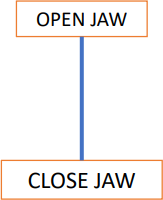
FOOD TO TEACH CHEWING

Strategies for treatment - by age

What is ARFID – Avoidant Restrictive
food intake disorder ?
APPARENT
LACK OF
INTEREST IN
EATING
- SOS
- CBT-AR
- UP-A
- Food exposure
- Food chaining
- 6 steps to eating
- Messy play

FOOD AVOIDANCE BASED ON
SENSORY
CHARACTERISTICS
OF FOOD
- Routine
- Timetable
- Explaining hunger/fulness
- Window of opportunity
- Motivation work
- TEAM work
- Other strategies

CONCERN ABOUT
AVERSIVE
CONSEQUENCES
OF EATING
- SOS
- CBT-AR
- UP-A
- Food exposure
- Working on emotions

Food chaining
• Teenagers and adults usually bring their own motivation to add a new food
– despite their sensory issues (i.e. – teenager that wants to be able to go
out with friends and eat pizza)
How could we work with that?



Messy Play

• The child does not have to eat the foods presented to them
• It is about exploring food with the child
• It is about sharing an experience with the child, not to the child.
• Regularly reassure the child that they are “ok”
• It is about getting messy – wash hands at the end
• Use different food characteristic, for example:
• Large dry foods
• Medium dry foods
• Fine dry foods
• Wet drinks
• Sticky foods
Progress through food texture


6 Steps to Eating
Visual

What does it look like?
- What is the colour?
- What size is it?
- What is the appearance?
Touch

What does it feel like?
- Is it wet or dry?
- Does it feel cold or hot?
- Does it feel bumpy or rough?
Smell

What does it smell like?
- Is it weak or strong smell?
- Is it a nice smell?
Taste

What does it taste like?
- Does it have a strong taste?
- Is it sweet or salty?
- Is it spicy?
Texture/Sound

What is the texture like?
What sound makes
in your mouth?
- Does it feel loud when you chew it?
- Is it crunchy?
- Does it get soft quickly?
*Not expected to eat, it is ok to spit it out
Swallow

Any other sensation?
- Any other sensation?
* Small mouthful is ok and gradually increase quantity- Emphasise that they are not expected to eat the food!!!
- Outside of mealtimes
- To try and stick to a routine – so they know what to expect
- To use different place to practice

Other strategies
Fade in - adding small amounts of food they don’t like into food they like
Add some spice – ketchup, curry, salt, honey, sugar
Food chain – try similar foods i.e. veggie chips with same format to potato chips
Change presentation – salted x unsalted
Deconstruct – break the food i.e. pizza – try with a piece of bread add tomato sauce add cheese…
THEY NEED TO AGREE WITH THESE STRATEGIES!
Oral supplementation
If needed - some options are:
Capsules
Tablets
Powder
Gummies
Liquids
Sprinkles
Patches
Spray
It is important to notice that very often iron is not
present at multivitamins/minerals – need to
supplement separately – please seek advice in this area
If old enough, let them chose which option they can
tolerate better
Trying to hide in food can be tricky as they will often stop
having the food the supplement was mixed with
Remember that if the label changes they might stop
accepting the supplement

Paediatrician role

• Assessment for underlying and potentially treatable contributing factors like history of gastroesophageal reflux disease due to cows-milk protein intolerance, premature delivery with subsequent feeding difficulties due to reduced acquisition of oral motor skills, organic disease including enteropathy due to coeliac disease and metabolic diseases.
• To assess risk for micronutrient deficiencies as evident from pattern of food restriction.
• To assess if patient is underweight for complications of protein/energy malnutrition including cardiac complications and impact on bone density
• To monitor if required nutritional rehabilitation in the underweight patient by admission with daily blood tests to rule out refeeding syndrome.
Medication


What to expect

Long term treatment as it takes time to develop a new skill, need a lot of support from the parents/carers/family
VERY important to discuss parent’s expectations and what success looks like for them!!!
- There is no right/wrong OR specific steps to get “there”…. Each child will work in a different way
- Each step can take days, months…and sometimes years…. They may change their minds during the process
- Depending on their presentation, they can “jump” stages (i.e. from square bread to bread and cheese) OR they will need more
steps – always ask how they feel about it and explain what to expect - The new food should not be expected to be eaten straight away,
sometimes is just about exposure
- Think about the 32 steps to eating
TAKE AWAY LESSON!!!!!
Step 1 - Explore what type of difficulties are present
Step 2 - Get help if needed
Step 3 - Choose the approach together
Step 4 - Consider a different intervention if the first one doesn´t work
Step 5 - Be consistent and set tangible expectations for both the
individual and parents/carers – be realistic!!!!!!!!
EVERYONE IS UNIQUE

“ Ultimately it’s change that will
take place over time, but I know I have begun my Journey on this long unknown road. “





Well Done!
- Completed

You have


My Notes
Supporting Videos

Looks aren't everything. Believe me, I'm a model.

Dove real beauty sketches. You're more beautiful than you think.

If you could change one thing about your body, what would it be?
We hear you and see you!
Get SupportSupported by


