For an accessible version or to translate, visit:
https://tinyurl.com/2f5xowz4

NHS

Scan to view online

Session 3

Body Image and Normal Eating

Session 3

Behaviours & Biology

  • Share this page
  • Download this page
     Download
  • Leave feedback
0%

Track your progress

Reset this module Reset this session

Please note: Answers & notes will be reset

Session 3
Behaviours & Biology

Behaviours individuals might do due to negative body image

From session 2 set 3 goals to help you
achieve your future pie chart:

img

What are some things people do when
impacted by negative body image?

Avoidance

Avoiding situations that make
us anxious

This might make us feel better in the short term, but in the long term it can have lots of negative effects…

However, it can have detrimental effects on body image in the long- term

Checking our bodies

Avoiding situations that make
us anxious

This can increase negative thoughts about how we look for a number of reasons…

This may momentarily reduce anxiety

But tends to increase negative body image thoughts over time

Some examples

Can you drag the correct “avoidance” or “checking” box to
answer the questions?

Checking our bodies
Avoidance
Answers

Looking at my body in the mirror every hour

img

I think this is...

Drag one of the options into this box

Never looking in mirrors

I think this is...

Drag one of the options into this box

Refusing to be hugged, to avoid their body shape being felt

I think this is...

Drag one of the options into this box

Pinching parts of your body/ measuring fat

I think this is...

Drag one of the options into this box

The Vicious Cycle of Avoidance

img
  1. Avoidance

  2. Miss out on things that could have
    given a sense of achievement or
    pleasure.

  3. Never get to checkout weather
    the fears are as bad as we imagined

  4. Feel less motivated and able to cope
    with the situation in the future

  5. Feel worse and even
    more anxious

The Vicious Cycle of Avoidance

  • Anxiety associated with body image can lead to
    avoidance behaviours.
  • This can mean missing opportunities to disprove
    the fears that fuel the anxiety in the first
    place and reinforces them instead.
  • Consider the ways that a cycle of
    avoidance may contribute to
    body image issues.

The Anxiety Curve

Curve
• Remind yourself that anxiety does gradually reduce.
• Avoiding or leaving a situation before their body has had a chance to habituate only reinforces the idea that the situation causes anxiety.
• On the other hand, resisting the urge to avoid & repeated exposure will mean the ‘panic peak'

The anxiety curve helps to further illustrate the viscous cycle of avoidance.


Anxiety tends to reach a peak, where it feels at its worst

Our bodies adjust and the anxiety gradually reduces.

When we avoid/leave the situation, anxiety
drops more quickly.

However, we miss the chance to habituate.

Curve

Think of one body image related fear you are going to face after today's session

You can use your hot cross bun model to reflect on the fear that comes to mind.

Behaviours

Thoughts

Emotion

Physical sensation

Thoughts

Behaviours

Emotion
Physical sensation

The Vicious Cycle of Checking

Feel bad
about self

Check your body/
appearance

Think about/focus all the bad parts of your appearance Remember the bits you don’t like

Evaluate yourself based
on how you look
(weight/shape/eating)

The Vicious Cycle of Checking

Feel bad
about self

Check your body/
appearance

Think about/focus all the bad parts of your appearance Remember the bits you don’t like

Evaluate yourself based
on how you look
(weight/shape/eating)

i

Increase in eating
disordered
behaviours

i

More focus on your body reinforces the belief that your body is the problem

Activity: Index finger checking

  • If you study your index finger, you’ll become aware of details you never noticed before.
  • Take a minute to look at it. Focus on the variation in colour, wrinkles, veins, dry skin...
  • The longer we focus on something, the more we see
  • Body checking can generate the same type of detailed- focused thoughts, which can often be negative (dependent on thinking styles – to be explored in next session).
  • This phenomena can offer you a greater understanding of the negative impacts of body checking and the way in which it can fuel critical thoughts.

The Vicious Cycle of Checking

Learning other ways to cope and take care of self

Resist body checking
and replace with behaviour
that do not focus on your body

Less focus on
your body

Urges to use ED
behaviours are
decreased

img

Select 2 or 3 Top tips you are
going to work on this week

Body avoidance

Reflect on the extent of your avoidance behaviours...

Reflect on the extent of your avoidance behaviours. Which avoidance behaviours occur? How often?
Create a small list of how you might avoid looking/
touching/ checking your body & for each behaviour, rate how distressed you would feel if you stopped doing them, on a scale of 0 to 100.
Let your loved ones know if you’d like them to
acknowledge your progress or encourage you to carry out the above.
Replace with different behaviours

Add another top tip

img

Select 2 or 3 Top tips you are
going to work on this week

Body checking

Determine the frequency of your body checking...

Determine the frequency of your body checking. What type of checking?
How many times per day? Are you aware of how often you might e.g. look in the mirror or measure your body?
Choose 2 or 3 checking behaviours that they would like to target.
Work on reducing gradually (e.g. 3x p. day instead of 6x p. day), limiting behaviours (e.g. once p. week instead of daily) or eliminating some behaviours altogether (e.g. stopping checking thighs).
You could also consider postponing behaviours (e.g. not checking your body until after work) if elimination feels too challenging a first step.

Add another top tip

Select 2 or 3 Top tips you are going to work on this week

Reducing anxiety

Targeting body avoidance or checking...

Targeting body avoidance or checking behaviours will likely give rise to anxiety in the short-term.
While this is challenging, remind yourself of long-term benefit of enduring short-term anxiety. You are working towards a positive body image.

Practice a deep breathing meditation...

Practice a deep breathing meditation and/or progressive muscle relaxation exercises.

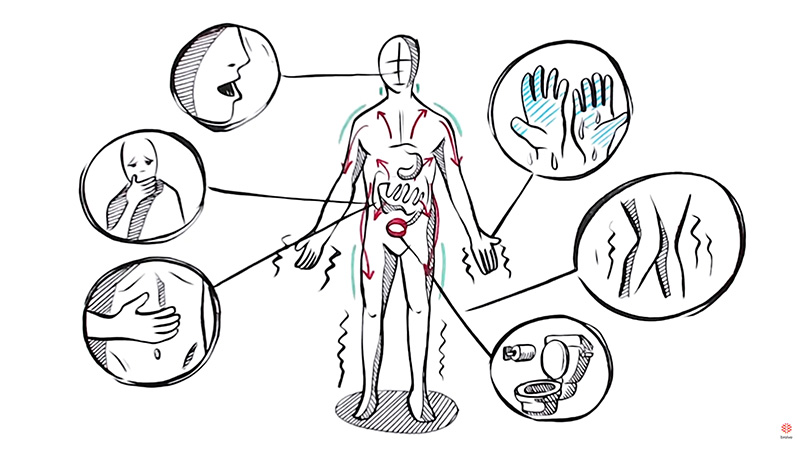
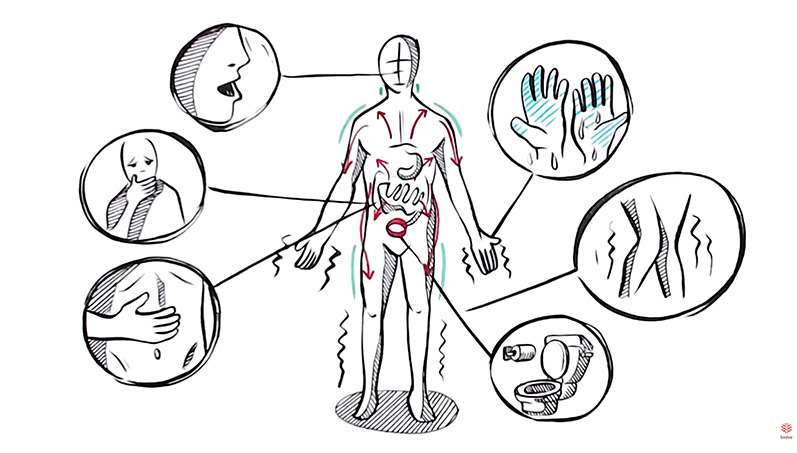
Fight, Flight or Freeze Response

This video explains how FFF-responses work, some of which may be familiar to you when experiencing high-stress situations.

Moments that trigger negative body image thoughts may be misinterpreted as a dangerous situation by our brain. Sometimes our body enters survival mode quicker than our mind can react.

Ways to turn OFF your fight or flight response 

Slow your
breathing

Relaxation strategy
– e.g. progressive
muscle relaxation  

Mindfulness meditation – this helps you to develop a muscle in your mind to direct your attention where you want it to go. 

Activity: Hot cross bun model

Complete a hot cross bun model

Start here

Identify avoidance/checking
behaviour

Behaviours

What thoughts lead to
this/result from this?

Thoughts

What feelings arise
before/after?

Emotion

Note the physical sensations
associated

Physical sensation

Start here

Identify avoidance/checking
behaviour

What thoughts lead to
this/result from this?

Thoughts

What feelings arise
before/after?

Behaviours

Emotion

Physical sensation

Note the physical sensations
associated

Reflections

image
image
image

Well Done!

- Completed
You have
Loading...

References or Creators Credit

Loading...

My Notes

Supporting Videos

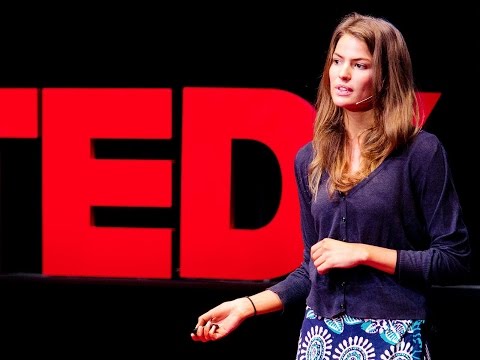
Looks aren't everything. Believe me, I'm a model.

Dove real beauty sketches. You're more beautiful than you think.

If you could change one thing about your body, what would it be?

We hear you and see you!

Get Support

Supported by

East London
Barnardos
Mental Health Foundation
Thames Life
Society Links

Recently Added FAQ’s

Energy-saving

Saving Energy