 Download
Quiz Time!
Warm up
Name the food or drink brand


Building a positive relationship with food and your body
For an accessible version or to translate, visit:
https://tinyurl.com/2mm7abbf
Scan to view online

Track your progress

Not moving your
body nuch right now

Stress
eating

Eating out
of boredom

Comfort
eating

Snacking
ALL DAY LONG

Having challenging
body image thoughts


Name the food or drink brand

Nutrient stores in the body
I think this is...
Drag one of the options into this boxHormone signals
I think this is...
Drag one of the options into this boxSocial setting
I think this is...
Drag one of the options into this boxNerve signals
I think this is...
Drag one of the options into this boxExpected taste from food
I think this is...
Drag one of the options into this boxVolume of food in the gut
I think this is...
Drag one of the options into this boxBody fat levels
I think this is...
Drag one of the options into this boxSmell of food
I think this is...
Drag one of the options into this boxSight of food
I think this is...
Drag one of the options into this boxBlood glucose levels
I think this is...
Drag one of the options into this boxThe time
I think this is...
Drag one of the options into this boxEating Habits
I think this is...
Drag one of the options into this box
• To maintain 24/7 basic functions that
keep us alive inside the body e.g.
heat, lungs, organs, brain.
• For exercise
• To digest food eaten
• For general movement in the day
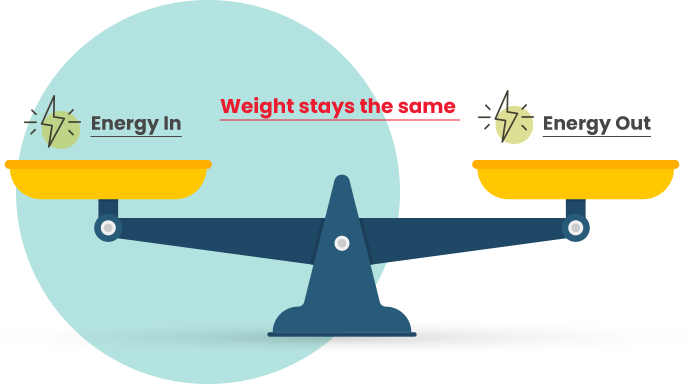


Body response to excessive food intake above energy needs.
• If you overeat in one sitting the body will increase of metabolic rate to use the excess energy in the body. You may notice feeling hot, sweaty, restless, and slightly nauseous.
• Consistently eating above your energy needs will result in storage of excess energy as fat and weight gain.

• Slow down functioning in the body to conserve energy (reduced metabolism)
• Increase hunger signals (Fat loss reduces Leptin, which is the fullness hormone, triggering Ghrelin, the hunger hormone, sometimes nicknamed the ‘growl’ hormone).
• Increase preoccupation around food (due to restriction of usually variety and quantity of food)
Make you feel rejuvenated
Improve social connections
Improve mood
Improve cardiovascular health, bone strength and muscle strength and stability
Current physical activity guidance for young people (5-18years) is to aim for at least
60 minutes moderate to vigorous intensity activity per day.
EXERCISE

Rejuvenates the body
Can make the body feel tired, but not run down or exhausted
Allows for rest whilst exercising
Allows for rest days based on how the body feels
Promotes positive emotional and physical outcomes
Allows for variety of movements and activities
Allows varied intensity of movement e.g. lighter activity days and more intense workout days
Promotes positive social interactions
Exercise within Government recommended health guidelines
Is enjoyable!
(excessive, driven, compensatory)
Leaves the body feeling exhausted (over exercising)
Extended bouts of exercise >60 minutes/day for multiple times in the day (*This may not apply for some young athletes)
Doesn’t allow for breaks
Increased stress, anxiety and low mood in relation not being able to exercise
Increased guilt if not able to exercise or with reduced intensity of exercise
Exercising as a punishment for eating or to allow you to eat
Exercising in secret
Inability to change type of exercise session or intensity of sessions
Still exercising when ill or unwell
Still exercising while injured
Inability to have a rest day (Compulsion to exercise more)
Exercising to give yourself permission to eat
Exercising to cancel out calories from food intake
Exercising more and more to achieve the same desired effect


Restriction
of intake

Increased Psychological
hunger for
avoided foods; increased
physical hunger
Increased thoughts about food;
fatigue; impaired
thinking; irritability; craving for
higher energy foods
Poor food choices;
overeating
Guilt from overeating or potentially
giving in to eating certain
avoided foods
Young athletes who participate in regular high intensity activity and competition, or who have multiple hours of exercise, will be using more energy.
If this is you, you will require greater intake to make sure there is still enough energy for your bodies basic functions. This is termed Energy Availability.
Low Energy Availability (LEA) is when there is not enough energy left over after exercise to cover basic body functions and so the body needs to compensate in it’s functioning to ensure the most essential processes still occur e.g. our brain functioning, heart pumping, lungs breathing, organs functioning.
Long term low energy availability can lead to Relative Energy Deficiency in Sport (REDS), which encompasses the multitude of physical and psychological impacts from consistent low energy availability. If you think you may have some signs of REDS, you can learn more about REDS on the Sport Ireland Institute fact sheets https://www.sportireland.ie/institute/performance-service/nutrition/red-s
It would be recommended to see your GP and a Registered Dietitian for further support in resolving REDS.
For young athletes, a more structured and regular intake, rather than an intuitive approach to eating is required to ensure there is appropriate fuelling for training and competing and to prevent unintentional low energy availability. This can sometimes mean eating even when you are not necessarily feeling hungry.

Body systems affected by REDS

Males have higher energy needs than females, generally speaking, due to higher muscle mass and larger bodies
Thermic Effect of food
Larger bodies means greater mass and cells requiring energy, therefore larger bodies actually have higher metabolic/energy needs compared to smaller bodies
Muscle requires greater energy due to it’s active nature of protein synthesis and breakdown
Adolescents and puberty is period of rapid growth, increases in weight and height, requiring additional energy to feed additional mass
Increases cortisol, stimulating greater fat and carbohydrate metabolism toproduce energy – essentially to provide sudden energy to ‘fight or flight’, if required!
Chemical messengers, therefore they signal for increased or decreased energy needs
Greater exercise or movement in the day requires greater energy


How do I balance my
energy input and energy
output to be healthy and
well?

This is where concepts of Intuitive eating and mindful eating were developed
Intuitive eating is: Trusting your inner body wisdom to make choices around food that feel good in your body, without judgment and without influence from diet culture.
Intuitive eating is: Trusting your inner body wisdom to make choices around food that feel good in your body, without judgment and without influence from diet culture.

How do I work toward being more intuitive in eating?


Carbohydrate intake

Carbohydrates help transport tryptophan into the brain

More serotonin can be made

Mood boost
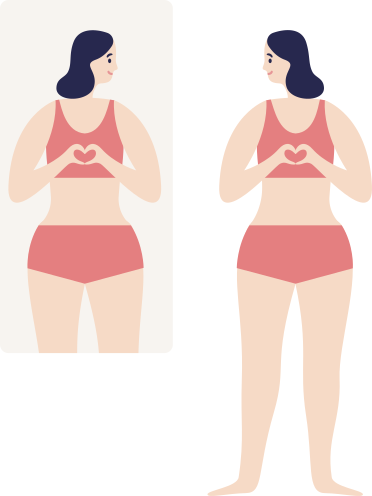


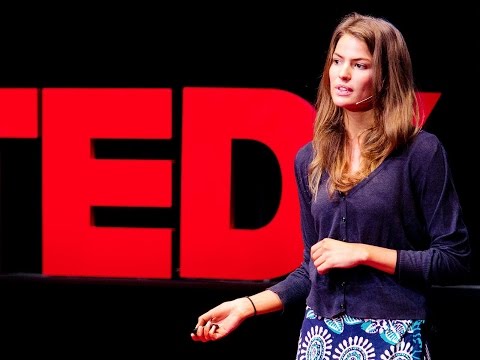
Looks aren't everything. Believe me, I'm a model.

Dove real beauty sketches. You're more beautiful than you think.

If you could change one thing about your body, what would it be?
We hear you and see you!
Get Support


Energy-saving
Saving Energy


